The Best Oil for Seasoning Cast Iron (and Why It Isn’t Flaxseed)
Short answer: Use a refined, neutral, high-smoke-point oil, grapeseed is a strong practical choice, applied in very thin coats. Flaxseed oil, still widely recommended from a popular method that’s over a decade old, is chemically a weaker choice for this specific job: it’s more prone to a brittle cure, and its low smoke point means more visible smoke and thermal breakdown during a typical seasoning session. No oil is proven to be universally best, but the evidence points consistently away from flaxseed.
Two properties of an oil predict how it will behave when seasoning a cast iron or carbon steel pan: how reactive it is chemically, which affects the texture of the cured film, and how much heat it can take before it starts smoking and breaking down. On both measures, grapeseed oil looks better than flaxseed, the oil most associated with cast iron seasoning. What neither property does, on its own, is prove how the seasoning actually holds up after months of real cooking. This article walks through what the evidence actually supports, and where it stops.
What seasoning actually is
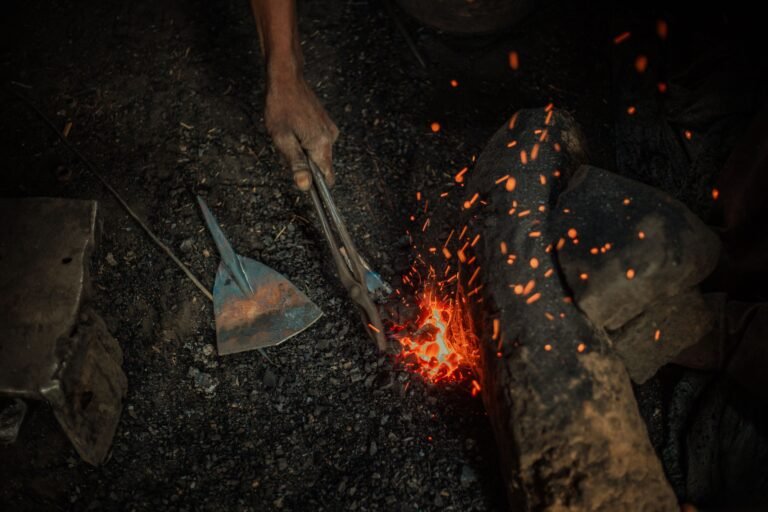
Seasoning isn’t a coating applied to a pan. It’s a reaction that happens on its surface. When a thin film of oil is heated, its unsaturated fat molecules react with oxygen and begin linking to one another, a process called autoxidation. Over time and repeated heating, this produces a complex, solid film bonded to the metal, made up of cross-linked and oxidized compounds rather than one uniform plastic layer. That film, not a layer of grease sitting on top, is what makes a well-seasoned pan release food cleanly.
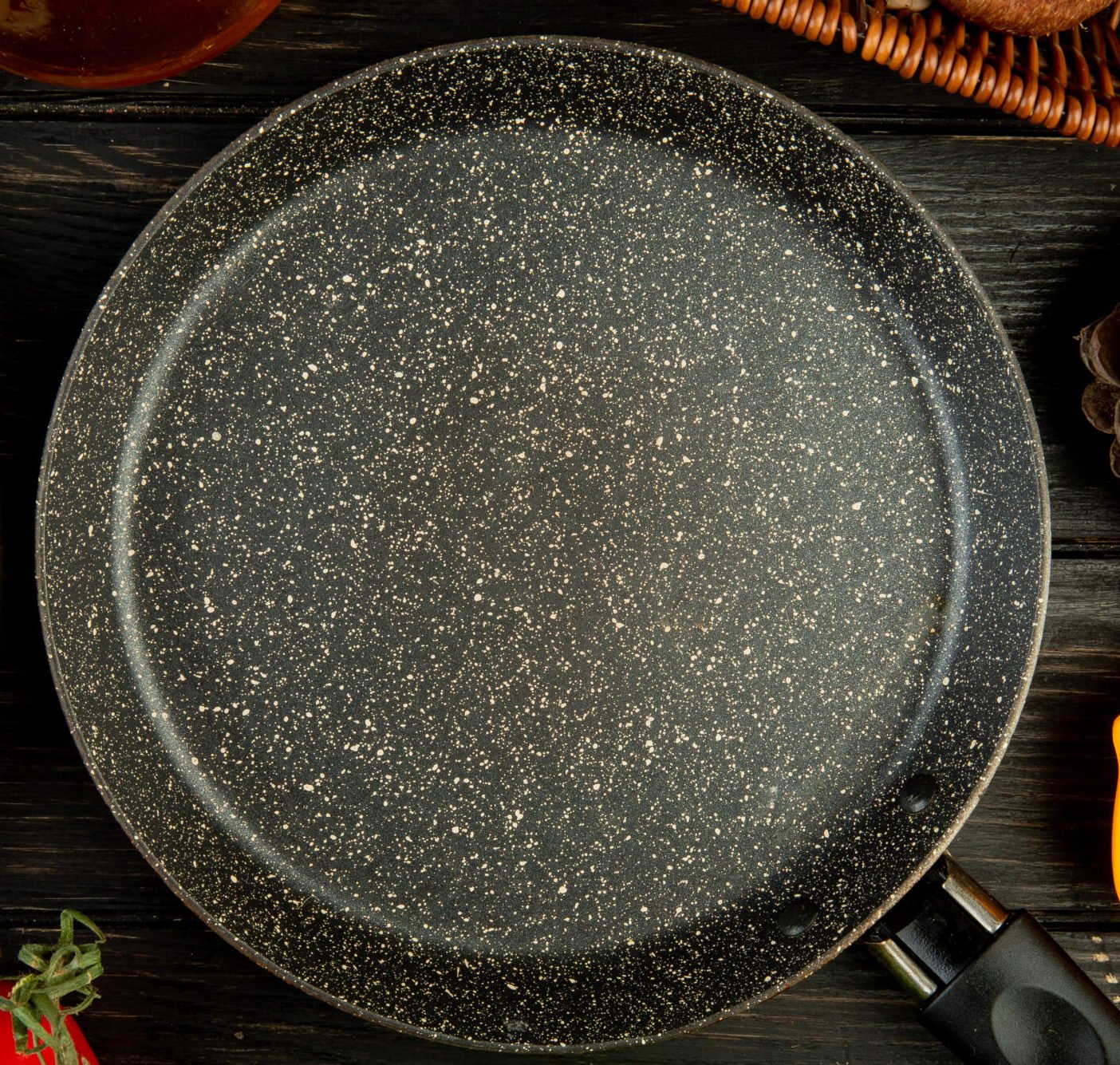
This is also why applying too much oil in one coat tends to backfire. A thick layer cures unevenly. Most explanations point to the reaction needing oxygen access through the depth of the film, not just at the surface, so a top that skims over before the layer underneath has fully reacted can leave a soft or gummy patch beneath a harder crust. Slower, uneven heating through a thicker film likely compounds the problem. Thin coats, applied and cured in several passes, sidestep it by giving the whole layer roughly equal access to heat and air at once.
Two properties that predict good seasoning, but don’t prove it
Iodine value: what the cured film tends to feel like
Iodine value measures how unsaturated an oil is, essentially, how many reactive sites it has available for cross-linking. Oils with a higher iodine value generally cross-link more extensively, though the finished film also depends on the oil’s specific fatty-acid mix, film thickness, and curing conditions, not iodine value alone.
Flaxseed oil sits high on this scale. Canada’s official grain-grading data puts flaxseed’s mean iodine value at 186.3, with graded lots ranging from about 179 to 201, a figure a peer-reviewed physicochemical study lands close to as well. Grapeseed oil sits meaningfully lower, commonly reported at around 124 to 150. A higher iodine value tends toward a harder, more extensively cross-linked film, and a harder film tends to be less forgiving under the repeated flexing and thermal cycling a pan goes through. That’s a reasonable, evidence-supported tendency. It is not, by itself, proof that a flaxseed-seasoned pan will perform worse in a real kitchen than a grapeseed-seasoned one; that’s a separate question this article can’t fully answer from chemistry alone.
Smoke point: a practical handling advantage, not a curing requirement
Smoke point is the temperature at which an oil begins producing continuous visible smoke under test conditions. It’s a real, useful number, but it’s easy to overstate what it means. An oil doesn’t need to reach its smoke point to cure. Flaxseed oil is a classic drying oil, prized for centuries in wood finishing, and it will slowly oxidize and polymerize even at room temperature, well below any smoke point. Heat speeds the reaction up; it isn’t a prerequisite for it to happen at all.
What smoke point actually predicts is how much visible smoke, odor, and uncontrolled thermal degradation accompany the process. Flaxseed oil’s smoke point is commonly cited between about 107 and 120°C (225 to 248°F). Grapeseed’s is commonly cited around 216°C (420°F), roughly double. Most stovetop or oven seasoning methods run well above both figures, often 230 to 260°C (450 to 500°F), so grapeseed itself will also smoke somewhat during a typical high-heat session. The practical difference is one of degree, not a clean pass or fail: a higher smoke point means less smoke, less odor, and fewer low-temperature breakdown byproducts over the course of curing, not that the oil stays clear of smoke entirely.
What this section can’t tell you, and the section above can’t either, is how the finished seasoning actually performs over months of cooking, scrubbing, and reheating. That’s a real-world durability question, not a chemistry-on-paper one. It’s also exactly what a primary-research test is for; a controlled, photographed comparison of pans seasoned with different oils and tracked over time is the kind of evidence that would actually close this gap, rather than infer it.
Does this change for carbon steel?
The underlying chemistry is identical, autoxidation doesn’t care what metal it’s happening on. But carbon steel and cast iron season differently because of how their surfaces are made. Cast iron’s microscopic surface irregularities, a product of sand casting, can help retain and mechanically anchor a cured film, though seasoning adhesion also depends on surface cleanliness, oxide condition, and how the film itself was built up and cured, not roughness alone. Carbon steel’s smoother, rolled surface doesn’t offer that same texture, which mainly means uneven or poorly bonded seasoning is easier to see, and easier to knock loose, especially before years of cooking have roughened the surface on their own.
That difference is a reason to be more careful with thin, well-cured coats on a new carbon steel pan, not a reason to use a different oil entirely. The same chemistry, and the same practical case for grapeseed or another neutral, high-smoke-point oil, applies to both metals.
Cast iron and carbon steel seasoning oils compared
| Oil | Iodine value | Smoke point (commonly cited) | Cured film |
| Flaxseed | ~175–205 (mean ~186) | ~107–120°C (225–248°F) | Highly cross-linked; tends toward hard and less forgiving |
| Grapeseed | ~124–150 | ~216°C (420°F) | Moderately cross-linked; tends toward firmer but more flexible |
| Canola (refined) | Lower than grapeseed, still mostly unsaturated (predominantly monounsaturated) | ~204°C (400°F) | Softer cure; typically needs more frequent reapplication |
Treat these as representative ranges, not fixed specifications. Iodine value and smoke point both vary by cultivar, refining, and testing method.
Which should you use?
Grapeseed oil is the strongest practical choice for seasoning a new pan, cast iron or carbon steel: a moderate iodine value that tends toward a flexible cure, and a smoke point high enough to keep visible breakdown to a minimum during curing.
A neutral, high-smoke-point oil like canola works as a substitute if grapeseed isn’t available. Its softer cure likely means more frequent light reapplication over time, but it won’t fight the curing process the way a low-smoke-point oil can.
Flaxseed oil isn’t ruled out for everything, it remains a genuinely good oil for cold or low-heat use, where its high omega-3 content is the point rather than a liability. For building a new seasoning layer specifically, the chemistry gives grapeseed the edge on two independent measures. Whether that edge holds up as clearly in an actual kitchen, over months of cooking rather than on paper, is the question our own seasoning test is designed to answer directly, and it’s a genuinely open one until that data exists.
None of this is a reason to strip a pan that already has a flaxseed-based layer working well. This describes what happens when a new layer is forming, not a verdict on pans already seasoned.