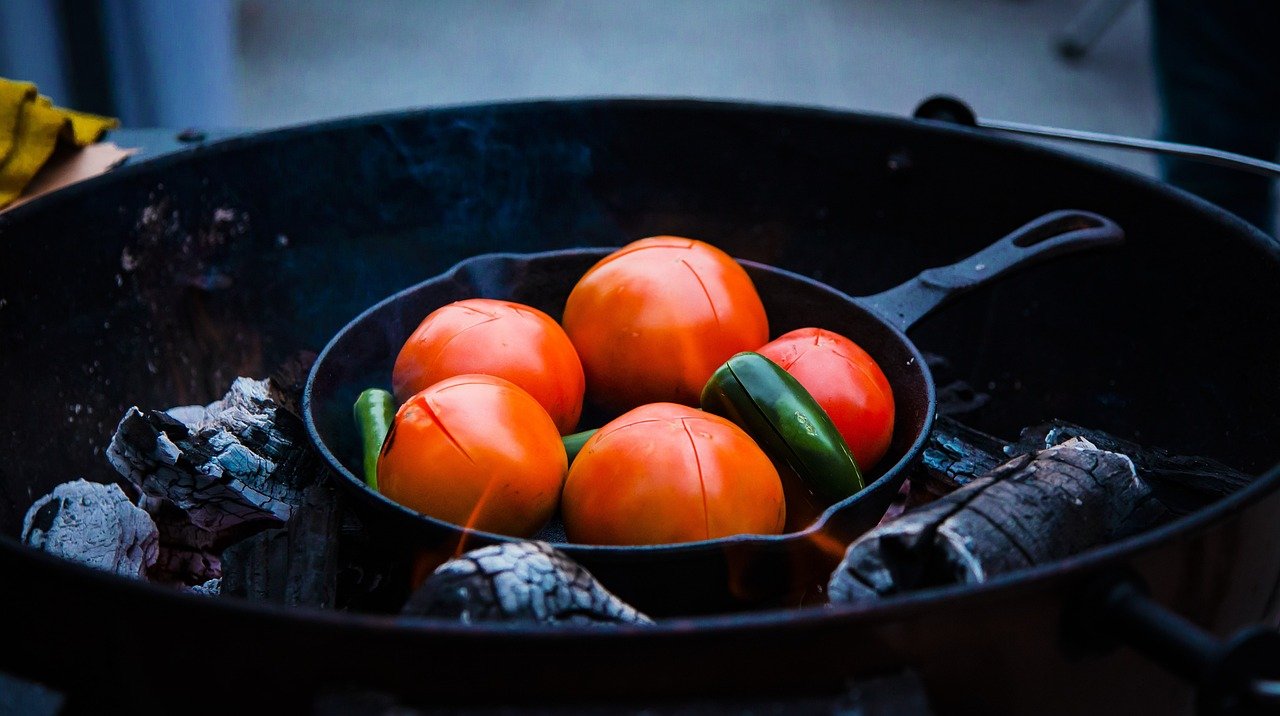
Cooking Tomato Sauce in Cast Iron (And What About Carbon Steel?)
Short answer: Cooking tomato sauce in cast iron is fine for a quick sauce or a short simmer in a well-seasoned cast iron or carbon steel pan. America’s Test Kitchen tested this properly: no metallic taste at 15 minutes, a mild one by 30. For most healthy people, the iron that leaches in isn’t a safety concern, the real cost is taste and seasoning wear, not harm. People with an iron-overload condition like hemochromatosis are the exception and should follow their own medical guidance here. Carbon steel hasn’t been tested the same way anywhere, but there’s a real reason to treat a brand-new one more gently than a cast iron pan that’s been cooking for years.
What acid is actually doing to your seasoning
Everyone says acid “breaks down” seasoning. Almost nobody says how, which is strange, because the chemistry isn’t a mystery. Seasoning is a cured oil film, the same general class of material as a coat of dried linseed oil paint, an oxidized, polymerized drying oil. Painters and conservators have spent decades figuring out how these films age, and it’s a useful place to look: acid and water can hydrolyze some of the ester bonds holding the polymer together, releasing fatty-acid compounds and weakening the film over time. One review of linseed oil films walks through exactly this. Smithsonian conservation research found the same breakdown strips out the small molecules that keep the film flexible, which can leave an acid-worn film more brittle or less well adhered over time, not always in the same visible way.
That’s borrowed science, painting conservation, not pans, and it deserves saying plainly rather than glossed over. A cookware seasoning film isn’t guaranteed to behave identically to an artist’s paint film, the oils, heat cycles, and substrate all differ. But it’s close enough, the same underlying reaction, to be a real answer to a question every cast iron blog just shrugs at.
So how long is actually safe
Nobody needs to guess at this one. America’s Test Kitchen already did the work, simmering tomato sauce in a seasoned skillet, an unseasoned one, and a stainless pot as a control, then tasting at 15 and 30 minutes. Fifteen minutes in, nobody could taste anything off. At thirty, tasters picked up metal in both cast iron pans, and a lab confirmed it, more iron in the sauce from the unseasoned pan than the seasoned one.
That tells you two real things. A good seasoning layer can substantially reduce contact between the food and bare iron. It’s not just superstition. And this whole conversation is about a weeknight sauté or a quick pan sauce, not an all-afternoon gravy. Past half an hour, nobody’s actually tested what happens.
Tomatoes are the mild end of this
People fixate on tomatoes, but tomato sauce sits around pH 4, milder than most of what’s in a typical kitchen. Wine runs 3 to 4. Vinegar drops to about 2.5. Straight citrus juice gets closer to 2. Lower means more reactive. A splash of tomato in a pan sauce is barely worth thinking about. Deglazing with straight vinegar or lemon juice is a different situation, and diluting it with stock or water, or just switching pans, is the more sensible move.
Carbon steel isn’t the same pan here
The chemistry above doesn’t care what metal it’s sitting on. What changes is the surface underneath it. Cast iron comes out of a sand mold rough, and that texture gives a curing film something to physically grip. Carbon steel usually starts smoother, with a thinner, less established film than an older cast iron pan carries, which makes a poorly bonded patch easier to lose in the first place. So a brand-new carbon steel pan is working with less to fall back on, right as the same acid chemistry is trying to loosen it.
Nobody has run America’s Test Kitchen’s experiment on carbon steel. This isn’t a tested result; it’s a reasonable conclusion built on real, published differences between the two surfaces, and it should be read as exactly that, not as settled fact. But the practical advice holds regardless: go easier on a new carbon steel pan than you would on a cast iron one that’s had years to toughen up.
If acid is a regular thing for you, not an occasional one
Enameled cast iron and plain stainless steel sidestep this entire question. Neither one cures into a reactive film the way bare seasoning does, so there’s simply no chemistry for the acid to attack. This doesn’t expose a flaw in bare cast iron or carbon steel; it just defines the trade-off. Bare pans give you that seasoning in the first place, and reward regular cooking, in exchange for needing a little judgment about what you’re simmering and for how long.
The verdict on cooking tomato sauce in cast iron
A quick tomato sauce or a fast deglaze in a well-seasoned pan isn’t something to worry about. Simmering past half an hour, or going straight vinegar or citrus, calls for a different pan. If it’s carbon steel and it’s new, give it the benefit of the doubt a little longer before you trust it the way you’d trust a cast iron pan that’s already been through a hundred dinners.